Oct 26
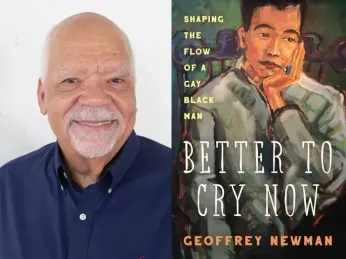
Words: Geoffrey Newman’s ‘Better to Cry Now’ – author discusses his memoir of race, sexuality, and the performing arts
Michele Karlsberg READ TIME: 2 MIN.
In “Better to Cry Now: Shaping the Flow of a Gay Black Man,” longtime California resident Geoffrey Newman shares his life lived at the intersection of race, sexuality, and the performing arts, from the segregated classrooms of 1950s Ohio to the dean’s office at Montclair State University. But it’s in California, where Newman finally found the kind of community and inclusion that he spent decades nurturing for others.
At Howard University, he created spaces for students of all backgrounds to find their voices. The homework assignment always reflected a place where art meets activism, and where lived experience becomes curriculum. He has seen how education transform lives. He has stories to tell because most of us are unaware of what impact we can have on the lives of each other.
Michele Karlsberg: What was the defining moment that led you to write “Better to Cry Now,” and why did you feel this was the right time to share your story?
Geoffrey Newman: I had long considered writing a memoir because I’ve always felt my life has been deeply blessed, especially in the journey of growing up, learning to accept myself, and ultimately learning to love who I am.
In observing the world around me, I saw many young people facing the same crisis of identity I once did. This struggle seemed even more urgent now, given the shifting political climate, the increasing attacks on diversity, and the rising tide of social pressure that too often turns negative. Instead of fostering understanding and tolerance, our society seemed to be leaning into anger, confusion, and chaos. By sharing my path, I hope to offer light in dark times, a reminder that healing is possible, and that hope, even in the face of hardship, still matters.
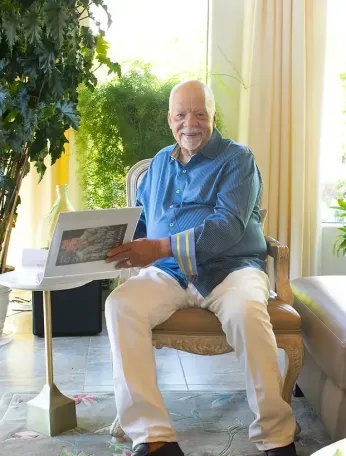
The memoir explores many personal challenges. What was the most difficult part of your journey to revisit and write about?
The most difficult part of my story to write was the section about my brother, my feelings about our relationship, and the deep shame I carried for having been so judgmental of him. There were many moments while recounting our experiences when I had to stop, shed tears, and then slowly begin again. It became one of the hardest and most cathartic processes I’ve ever gone through.
You write about breaking barriers. What barriers, internal or external, were the hardest to overcome, and how did they shape your identity?
The most difficult barrier I had to overcome was learning how to love myself, accepting both my shortcomings and my strengths, and finding the courage to be true to the man I was, and the man I aspired to be, not the version others expected or wanted to see. Learning from failure, growing through the pain that so often comes from falling down, and finding the strength to get back up and try again was, and remains, my greatest challenge.
The title “Better to Cry Now” is evocative. What does it mean to you personally, and how does it capture the essence of your life’s path?
“Better to Cry Now” comes from a phrase my mother often used to help us face the challenges of public school integration: “Better to cry now than be sorry later.” Her words became more than just comfort. They became a lifelong mantra. That simple adage taught me the importance of preparation, resilience, and the courage to face any battle head-on. It reminded me never to give in to fear or self-doubt. Even now, it remains my guiding principle, a steady light at the end of every tunnel.
How did you find the strength to be vulnerable in your writing, especially when discussing moments of pain, rejection, or failure?
I found the strength and courage to be vulnerable in my writing by refusing to let embarrassment or overthinking hold me back. When I wrote from the heart not just the head and allowed my emotions to flow freely, a deeper honesty began to emerge. My words took on greater meaning and power.
At times, I struggled with how much of my vulnerability I should reveal. But I came to understand that true connection requires transparency. I needed to be as open, honest, and emotionally expressive as possible no matter how painful that might be. Only then could my story truly resonate.
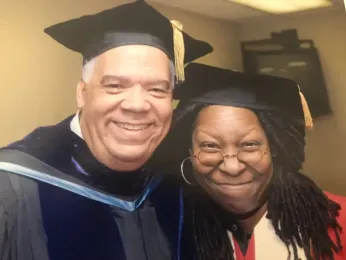
What does true acceptance look like for you, and how long did it take to arrive at that place?
Acceptance of myself who I am and who I want to become, was always a deeply personal struggle. I could never be content with simply allowing others to define me; that was a path that never fit. Instead, I realized I had to shape the course of my own life, not just ride the waves. This understanding took years to fully grasp, and even longer to master.
As a gay Black man, I had to define what that identity meant for me. I refused to conform to stereotypes or mimic others just to feel accepted. I had to embrace my uniqueness, my own path, and the way I chose to live it.
If you could go back and speak to your younger self at one of your lowest moments, what would you say and has writing this book changed that message?
I would say, don’t let the fear of making mistakes dampen your resolve to take risks or step outside your comfort zone. As my father used to say, “The greater the risk, the greater the return. The more you give, the more you receive. Always go for the golden ring.”
What has been the most surprising or rewarding response to your memoir so far, and how has it affected your sense of purpose or direction?
I’ve been genuinely surprised by how the message of my book continues to inspire others. Conversations with readers opened my eyes to the universality of my experiences. When I first told my story, I didn’t fully realize that “coming of age,” building self-confidence, taking risks, and stepping outside one’s comfort zone are struggles and aspirations shared by so many.
As Ralph Remington wrote, “I am certain that ‘Better to Cry Now’ will not only change but indeed save people’s lives. In this harsh and cruel time that we live in, what a gift it is to receive such a precious flower.”
https://www.geoffreynewmanauthor.com/
Michele Karlsberg Marketing and Management specializes in publicity and marketing for the LGBTQ+ community. This year, Karlsberg celebrates 36 years of successful campaigns. www.michelekarlsberg.com