11 hours ago
Rijeka Rising: Croatia’s Quietly Queer Adriatic Port You Haven’t Heard About (Yet)
READ TIME: 7 MIN.
When most queer travelers think of Croatia, images of Dubrovnik’s stone walls or Split’s Roman palaces usually come to mind, often paired with caution about the country’s conservative politics. Yet several hours up the coast, Rijeka—Croatia’s third‑largest city and principal seaport—has been quietly charting a different course, developing a reputation among regional activists and culture workers as one of the country’s most welcoming urban spaces for lesbian, gay, bisexual, transgender, and queer people.
Rijeka’s queer‑friendlier environment did not appear overnight. It grew out of a longer local tradition of left‑leaning politics, worker solidarity, and experimental art that has often set the city apart from the rest of the country.
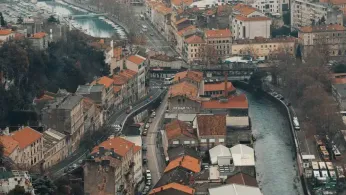
Rijeka sits on Kvarner Bay in the northern Adriatic, historically shaped by Austro‑Hungarian, Italian, and Yugoslav rule before becoming part of independent Croatia in the 1990s. This layered past is visible in the Habsburg‑era palaces along Korzo, the main pedestrian promenade, and in the remnants of heavy industry that once made Rijeka one of Yugoslavia’s key shipbuilding centers.
That industrial identity also fostered a strong working‑class culture and a tradition of protest. Rijeka was one of the first Croatian cities to see mass anti‑fascist mobilization during World War II, and later hosted important punk and alternative scenes in socialist Yugoslavia. Contemporary queer organizers in the city frequently reference this legacy of resistance and non‑conformity when explaining why they feel comparatively safer being visible here than in some other Croatian urban centers.
In 2020, Rijeka served as one of the European Capitals of Culture, a European Union initiative that highlighted the city’s experimental arts institutions, from the Museum of Modern and Contemporary Art to a network of independent cultural centers housed in former industrial spaces. The official program included explicit LGBTQ+ themes and collaborations with local queer organizations, further legitimizing their presence in the city’s cultural mainstream.
For queer visitors, one of Rijeka’s most important assets is the presence of LORI Association , a local lesbian and feminist organization founded in 2000. LORI is one of the oldest LGBTQ+ organizations in Croatia and is based in Rijeka, where it has long provided counseling, educational programs, and public campaigns against homophobia and transphobia.
LORI has also been central in organizing Rijeka’s contribution to May 17th International Day Against Homophobia, Biphobia and Transphobia , staging public actions, exhibitions, and discussions in city spaces. These events, often held in collaboration with the City of Rijeka’s Department of Culture, signal an official openness to LGBTQ+ visibility that is still uneven across Croatia.
While Croatia’s most widely reported Pride events happen in Zagreb and Split, Rijeka has hosted smaller but symbolically important queer public gatherings and community festivals over the last decade, including film screenings, panel discussions, and cultural programs under banners such as “Smoqua – Festival of Queer and Feminist Culture.” Smoqua, founded in 2017, combines workshops, performances, and exhibitions with regional and international guests; organizers describe it as a space for “feminist, queer, and artistic reflection” in the Adriatic context.
These initiatives mean that, although Rijeka does not yet have the density of commercial gay bars or clubs seen in larger European capitals, it offers a community‑based infrastructure where queer travelers can plug into local networks anchored by activism and arts rather than nightlife alone.
Croatia has made several formal advances on LGBTQ+ rights in the last decade, including the introduction of life partnerships for same‑sex couples in 2014 and subsequent provisions allowing non‑married same‑sex couples to foster children. However, rights organizations have documented ongoing discrimination, periodic anti‑Pride incidents, and challenges for transgender people in accessing legal gender recognition and adequate healthcare.
Within this national context, Rijeka stands out for several reasons:
Firstly, surveys and anecdotal reporting by Croatian LGBTQ+ groups describe Rijeka as having a relatively high level of everyday acceptance, especially among younger residents, compared to some inland and smaller coastal towns.
Secondly, city officials in Rijeka have consistently partnered with civil society on anti‑discrimination campaigns, including support for educational workshops in schools and cultural venues. This institutional backing gives queer cultural events a sense of security and continuity.
Thirdly, Rijeka’s identity as a historically multicultural port—with Italian, Slovene, and other minority communities still present—has contributed to a civic narrative that values diversity. Scholars of Croatian urban history note that this pluralism often translates into greater openness toward gender and sexual diversity as well.
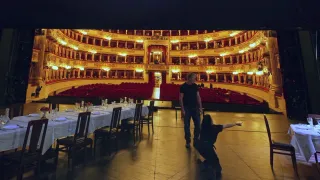
For queer travelers, much of Rijeka’s appeal lies in its scale. The city center is compact and walkable, with Korzo at its heart, lined with cafés where couples of all genders can sit together without attracting undue attention. From here, side streets lead to the port, the main market, and cultural landmarks like the imposing St. Vitus Cathedral and the 19th‑century National Theatre Ivan pl. Zajc, which has hosted productions by openly queer and feminist directors.
Climbing the steps behind the city brings visitors to Trsat, a hilltop neighborhood crowned by a medieval fortress and a Franciscan monastery. The views over Kvarner Bay and the islands of Krk and Cres are a reminder that Rijeka is at once an industrial port and a gateway to some of the Adriatic’s most coveted beaches. In warmer months, local residents—queer and straight—head to pebble beaches along the city’s eastern shoreline and to nearby coastal towns like Kostrena and Opatija for swimming and sunbathing.
Rijeka’s food culture reflects its mixed heritage. Seafood risottos and grilled fish share menus with Central European comfort dishes and Italian‑influenced pastas. Independent cafés and bars in the center and around the artsy “Benčić” complex—home to the Museum of Modern and Contemporary Art and the Children’s House—often host exhibitions and DJ nights that attract a young, alternative crowd, including many LGBTQ+ locals.
Unlike major queer capitals where clubbing dominates the experience, Rijeka’s emerging appeal lies in its cultural programming.
The Museum of Modern and Contemporary Art Rijeka has mounted exhibitions engaging with gender, sexuality, and body politics, including works by regional queer artists. Film screenings organized with local NGOs have featured documentaries on LGBTQ+ activism in the Balkans and beyond, often followed by discussions with activists and scholars.
During the European Capital of Culture year, several projects directly addressed queer histories and identities, such as performances exploring same‑sex desire in Yugoslav popular culture and installations highlighting the marginalization of LGBTQ+ people in post‑socialist transitions. Organizers report that these events drew mixed audiences and sparked public conversations about gender and sexuality that continue to resonate in the city’s cultural scene.
The Smoqua Festival of Queer and Feminist Culture has quickly become a key date on the local calendar, typically taking place in autumn. Programmes have included drag performances, zine‑making workshops, self‑defence classes for queer and feminist communities, and lectures on topics ranging from non‑binary identities to regional transfeminist movements. International guests from neighboring Slovenia, Italy, and Serbia underscore Rijeka’s position as a meeting point in the northern Adriatic for feminist and LGBTQ+ networks.
These culture‑driven spaces are particularly valuable for transgender people, non‑binary people, and other gender‑diverse travelers who may not feel fully at ease in more conventional gay nightlife environments. Workshops and discussions foreground intersectional experiences, including those of migrants, Roma people, and disabled queer people, reflecting a broader commitment to inclusivity.
From a logistics standpoint, Rijeka is accessible by bus and train from Zagreb and by ferry or catamaran from several Adriatic destinations, with a nearby airport on the island of Krk serving regional flights. Accommodation options range from small family‑run guesthouses to contemporary hotels along the waterfront.
Human rights groups note that while legal protections against discrimination on the basis of sexual orientation and gender identity exist in Croatia, the lived experience of LGBTQ+ people varies by region. In Rijeka, local activists emphasize that displays of affection such as holding hands are generally possible in central areas without major incident, especially during daytime and around cultural venues. However, they still advise caution late at night in less busy parts of the city, similar to guidance offered for many European destinations.
Transgender people traveling to Croatia may face particular challenges, including inconsistent understanding of gender diversity in medical and bureaucratic settings. In Rijeka, LORI and partner organizations sometimes facilitate referrals to LGBTQ‑affirming professionals and can offer up‑to‑date local guidance for those who reach out in advance via their website .
Rijeka rarely appears on mainstream LGBTQ+ travel lists, which tend to focus on cities like Berlin, Barcelona, and Amsterdam. However, some specialized travel features on “hidden” queer‑friendly destinations in Europe and the Adriatic region have begun to spotlight Croatia and the Kvarner area—often emphasizing the role of grassroots organizations and smaller festivals over large commercial Pride events.
Within this broader trend, Rijeka stands out as:
- Welcoming: A city administration that partners with LGBTQ+ groups, visible queer and feminist festivals, and cultural institutions hosting gender‑ and sexuality‑themed projects all contribute to a sense of safety for visitors.
- Emerging: Rather than a saturated party destination, Rijeka offers an evolving scene where new queer‑inclusive events and collaborations appear each year, many still small enough that visitors can meet organizers and artists personally.
- Culturally rich: From its European Capital of Culture legacy to ongoing experimental art, theatre, and music, the city offers depth well beyond sun and sea, with queer perspectives increasingly woven into this fabric.
For LGBTQ+ travelers seeking a European destination where they can explore both queer community life and local history without the pressure of a hyper‑commercial scene, Rijeka offers a compelling alternative. Cafés on Korzo instead of mega‑clubs, conversations at a feminist zine workshop instead of all‑night circuit parties, a swim in Kvarner Bay after a day at the museum: it is in these quieter combinations that the city’s appeal reveals itself.
And as local organizers continue to build festivals, alliances, and safe spaces, Rijeka’s position as a hidden gem on the queer map of Europe is likely to strengthen—still under the radar enough to feel intimate, but increasingly connected to a broader Adriatic and European LGBTQ+ network.